



Lifting Clamp RFQ Checklist for 5 Load-Handling Scenarios
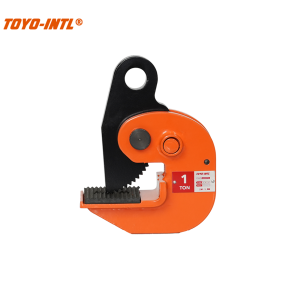
A lifting clamp RFQ succeeds when the buyer states the load geometry, the material condition, and the lift direction. The right clamp depends on the shape and surface of the load, not on the weight alone. This guide organizes the RFQ fields around five common load-handling scenarios.
The five scenarios are not ranked best-to-worst. Each scenario appears because TOYO-INTL publishes WLL and jaw-opening data for the matching series, and each one lists the RFQ fields that matter most. Final selection must be confirmed by a qualified rigger or engineer. A clamp that looks right by weight alone can still fail if the jaw opening does not match the actual plate thickness or if the surface condition prevents a secure grip.
Five Load-Handling Scenarios at a Glance
| Scenario | Primary RFQ focus | TOYO-INTL series to review |
| 1. Vertical plate lifting / flipping | Plate thickness range, WLL per clamp, turning requirement | CD, CDH |
| 2. Horizontal plate handling | WLL per pair, jaw opening vs. plate thickness, sling angle | PDB, LC, PDQ |
| 3. Long flexible plates with spreader beam | Clamp spacing, pair count, sling geometry, load stability | PDQ, PDB |
| 4. Pipe / tube lifting | Pipe diameter range, WLL per pair, jaw contact surface | TPH |
| 5. Beams, drums, or special loads | Flange width, drum diameter, ferrous vs. non-ferrous | JG, CDL/CDLB, PML/PML-A |
1. Vertical Plate Lifting / Flipping
When to shortlist a vertical plate clamp
Shortlist a vertical clamp when the load starts flat and must stand upright or flip 180 degrees. A vertical lifting clamp grips the edge of a steel plate and lifts it from horizontal to vertical. During fabrication, a turning clamp rotates the plate 180 degrees while it stays gripped. The clamp must match both the plate thickness and the load weight.
What the published data says
- CD Lifting Clamp: WLL 0.8–30 t per clamp; jaw opening: match the datasheet row (not published as one range); vertical steel-plate lifting and 180-degree turning. The CD is the only series rated for turning.
- CDH Lifting Clamp: WLL 0.8–30 t per clamp; jaw opening 0–16 to 80–220 mm; vertical steel-plate and steel-structure lifting.
What to confirm before ordering
- Exact plate thickness range and material hardness for the required WLL row.
- Whether the CD or CDH jaw profile suits the plate surface condition.
- Sling angle and number of clamps for the planned lift.
2. Horizontal Plate Handling
When to shortlist horizontal plate clamps
Shortlist horizontal clamps when the plate stays flat during the lift. Horizontal plate clamps carry steel plates flat, usually in pairs hung from one sling or a spreader. The published WLL for these clamps is often rated per pair, not per clamp.
What the published data says
- PDB Lifting Clamp: WLL 0.8–16 t per pair; jaw opening 0–20 to 100–180 mm; horizontal steel-plate lifting and transport. Use at least four clamps and keep the sling top angle within the published limit (not more than 45 degrees from vertical).
- LC Lifting Clamp: WLL 1–3 t per pair; jaw opening 1–13 mm (LC1), 3–22 mm (LC2), or 12–35 mm (LC3); horizontal lifting and transfer of thin plate.
- PDQ Lifting Clamp: WLL 1–20 t per pair; jaw opening 0–50 to 0–240 mm; single or multiple steel-plate lifting. Use with a spreader beam and at least four clamps.
What to confirm before ordering
- Whether the rating for the selected model applies per pair or per clamp.
- The sling angle derating factor for the proposed arrangement.
- Compatibility with thin or coated plate surfaces.
3. Long Flexible Plates with a Spreader Beam
When to shortlist a spreader-beam setup
Shortlist a spreader beam with four or more clamps when the plate is long or thin enough to flex. A plate lifted at only two points can bend during the lift. A spreader beam and four or more clamps distribute the load and keep the plate flat.
What the published data says
- PDQ Lifting Clamp: WLL 1–20 t per pair; jaw opening 0–50 to 0–240 mm; rated for single or multiple plate lifting with a spreader beam and at least four clamps.
- PDB Lifting Clamp: WLL 0.8–16 t per pair; jaw opening 0–20 to 100–180 mm; horizontal transport in which paired clamps share the load.
What to confirm before ordering
- The number of clamps and pairs required for the plate length.
- Spreader beam capacity and connection hardware.
- Engineering review of the lift plan for long or thin plates.
4. Pipe / Tube Lifting
When to shortlist a pipe lifting clamp
Shortlist a dedicated pipe clamp when the load is curved. Steel pipes and concrete pipes need a jaw that contacts the curved surface safely. The jaw must match the pipe diameter range, and the load must stay stable during travel.
What the published data says
- TPH Lifting Clamp: WLL 1.5–18 t per pair; jaw opening 40–70 mm; horizontal lifting of steel and concrete pipe.
What to confirm before ordering
- The pipe diameter range within the published 40–70 mm jaw opening.
- Whether coated or concrete pipes need padding or a different contact surface.
- Bundle lift arrangements and the center-of-gravity location.
5. Beams, Drums, or Special Loads
When to shortlist special-load lifters
Shortlist beam clamps, drum lifters, or magnetic lifters when the load is not a flat plate. Steel I-beams, industrial drums, and round ferrous stock each need a dedicated gripping method. Match the tool to the load shape before you write the RFQ.
What the published data says
- JG Beam Clamp: WLL 1–10 t; jaw opening 75–320 mm I-beam width; beam clamping and hoisting as a rigging attachment.
- CDL / CDLB Drum Lifter: WLL 1,000 kg; drum lifting and beam-flange rigging point.
- PML Permanent Magnet Lifter: rated capacity 100–5,000 kg; max pull force 300–15,000 kg; plate and round steel.
- PML-A Permanent Magnet Lifter: rated capacity 100–2,000 kg for steel plate and 50–1,000 kg for round steel; max pull force 3.5 times the rated capacity.
What to confirm before ordering
- Beam flange width within the JG 75–320 mm range.
- Drum diameter and banding for the CDL or CDLB application.
- Material thickness and surface condition at the magnetic contact area (magnetic lifters require ferrous material and adequate section thickness).
How to Choose Among the 5 Scenarios
Start with the load shape. A flat plate that must stand or flip points to the vertical scenario. A flat plate that travels flat points to the horizontal scenario. A curved load points to the pipe clamp, and any I-beam, drum, or round bar points to the special-load lifters.
Move on to the capacity basis. The vertical CDH and CD ratings apply per clamp. The horizontal PDB, PDQ, and LC ratings apply per pair. Count the clamps you will actually hang, then compare the published WLL against the weight that each clamp position carries.
Finish with the surface and the environment. Mill scale, paint, rust, and coatings change the grip, and magnetic lifters only hold ferrous material with enough section thickness. State the surface condition and the working environment in the RFQ so the supplier can confirm the selection.
A Practical Shortlisting Sequence
- Define the load shape and its orientation during the lift.
- Weigh the load and measure its thickness or diameter.
- Match the shape to one of the five scenarios above.
- Check the published WLL basis, per clamp or per pair, against the weight per clamp position.
- Verify the jaw opening against the actual plate thickness or pipe diameter.
- List the surface condition, sling angle, and environment in the RFQ.
Consolidated Lifting Clamp RFQ Checklist
Copy the following fields into your RFQ and fill in each row:
| RFQ field | What to provide |
| Load shape | Plate, beam, pipe, drum, round bar, or other profile |
| Load weight | Total weight in kg or t; note if per clamp or per pair |
| Plate / load dimensions | Length × width × thickness (mm) |
| Material | Carbon steel, stainless, aluminum, concrete, other |
| Surface condition | Mill scale, painted, rusted, machined, coated |
| Required jaw opening | Min–max thickness or diameter (mm) |
| Lift direction | Vertical, horizontal, turning, tilted |
| Number of clamps | Single, pair, or multi-point |
| Sling arrangement | Vertical sling, bridle angle, spreader beam |
| Sling angle | Degrees from vertical (affects WLL) |
| Environment | Indoor/outdoor, temperature, chemicals, dust |
| Use frequency | Occasional, daily, multi-shift |
| Destination | Country / region for shipping and certification |
| Documents | Test certificate, declaration, manual language |
Frequently Asked Questions
Is published WLL per clamp or per pair?
The published basis depends on the model. TOYO-INTL rates some clamps per pair (for example, PDB at 0.8–16 t per pair and LC at 1–3 t per pair) and others as a single-clamp WLL (for example, CD at 0.8–30 t). Always check the product page labeling and confirm with the supplier.
Does sling angle reduce the safe working load?
Yes. When clamps hang on an angled bridle sling, the force on each clamp increases. The effective WLL must be derated for the actual sling angle. Provide the planned sling angle in the RFQ so the supplier can verify the clamp selection.
Can lifting clamps be used on stainless or aluminum plate?
Not without confirmation. Standard steel plate clamps grip ferrous steel surfaces. Using them on stainless, aluminum, or coated materials may damage the surface or slip. State the exact material and surface condition in the RFQ.
When should I use a magnetic lifter instead of a clamp?
Use a permanent magnetic lifter, such as the TOYO-INTL PML or PML-A, for ferrous loads where edge clamping is impractical, such as smooth plates or round stock. Magnetic lifters require adequate material thickness and flat contact. They are not suitable for non-ferrous metals or thin sheet below the published minimum.
Is the first scenario in this article the safest option?
No. The numbering organizes five load-handling scenarios. It is not a safety rating or quality ranking. Each scenario lists different RFQ fields and different TOYO-INTL product series. The correct choice depends on the specific load and lift plan.
Conclusion
Each scenario reduces to one matching decision. Vertical CDH and CD clamps stand plates up and turn them 180 degrees. Horizontal PDB, LC, and PDQ clamps carry plates flat, with PDQ and a spreader beam covering long flexible plates. The TPH grips pipe, and the JG, CDL/CDLB, and PML/PML-A series cover beams, drums, and ferrous special loads.
Send the RFQ with the completed checklist, a sketch or photo of the load, and the planned sling arrangement. TOYO-INTL reviews the load shape, weight, thickness, and surface condition to recommend a series. Have a qualified rigger or engineer approve the final lift plan before use, and never exceed the WLL on the clamp nameplate.
Sources & Verification
Product data sources:
- TOYO-INTL Lifting Clamp & Magnet Lifter category page: https://www.toyointl.com/product-category/lifting-clamp-magnet-lifter/
- TOYO-INTL Lifting Clamp & Magnet Lifter category page (page 2): https://www.toyointl.com/product-category/lifting-clamp-magnet-lifter/page/2/