


To read a hydraulic hand pallet truck data sheet, find the exact model row and read four values together: rated load, fork outer width, fork length, and the height when the fork is lowered. On the SHLT15-550 manual scissor high-lift truck, those values are 1,500 kg, 550 mm, 1,150 mm, and 85 mm. Every value belongs to that one row.
A data sheet is a set of model rows, not a list of universal numbers. A buyer who takes a load figure from one row and a fork width from another creates a specification that no single product may match. This guide uses one published TOYO-INTL row to show how to read each field, what each field controls, and which mistakes to avoid.
The Four Numbers to Read First
Every hand pallet truck decision starts with four fields. The table below reproduces two rows from the TOYO-INTL manual scissor high-lift truck data sheet. Read across a single row, never down a single column.
| Field (published label) | SHLT15-550 | SHLT15-685 |
| Rated load (kg) | 1,500 | 1,500 |
| Fork outer width (mm) | 550 | 685 |
| Fork length (mm) | 1,150 | 1,150 |
| Height when the fork is lowered (mm) | 85 | 85 |
Note: These values describe the two published configurations of this model family. They are not a general rule for all hand pallet trucks. The exact model and row on the supplier’s data sheet govern selection.
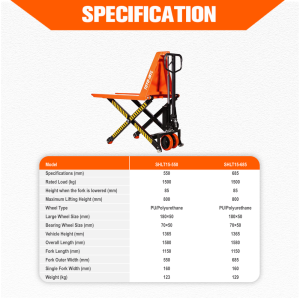
The published SHLT data sheet, with the SHLT15-550 and SHLT15-685 rows.
What Each Field Tells You
Rated Load
Rated load is the maximum weight the truck is specified to lift in that configuration. The SHLT15-550 row publishes 1,500 kg. Rated load does not state how many lifts the truck can make in a shift.
Fork Outer Width
Fork outer width is the distance across the outside edges of the two forks. The SHLT15-550 publishes 550 mm and the SHLT15-685 publishes 685 mm. This dimension decides whether the forks enter the openings in a given pallet.
Fork Outer Width vs Single Fork Width
The same table also publishes a single fork width of 160 mm on both rows. Single fork width measures one fork from edge to edge. Fork outer width measures the distance across the outside of both forks, 550 mm or 685 mm.
Pallet fit depends on the outer width, not the single fork width. 160 mm is the width of one fork, not the truck’s fork width. Quote 550 mm (or 685 mm) when a buyer asks about fork width.
Fork Length
Fork length is the usable front-to-back length of each fork. Both rows publish 1,150 mm. Fork length sets how far the fork reaches under a pallet and where the load sits relative to the wheels.
Height When the Fork Is Lowered
This field gives the fork height in the fully lowered position. Both rows publish 85 mm. A lower lowered height helps the forks enter a pallet and pass under low thresholds.
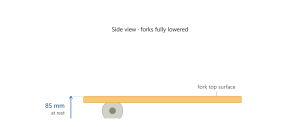
Do not confuse this 85 mm value with the maximum lifting height of 800 mm printed further down the same table. The lowered height describes the forks at rest. The maximum lifting height describes the forks raised to their top position.
Why One Number Is Never Enough
A single value cannot describe a truck. The two rows above share a 1,500 kg rated load, a 1,150 mm fork length and an 85 mm lowered height. They differ only in fork outer width, 550 mm against 685 mm. A buyer who compares rated load alone sees no difference at all.
The pallet decides which row fits. A 550 mm outer width suits narrower pallet openings. A 685 mm outer width covers wider pallets. Both trucks lift the same 1,500 kg, yet they serve different pallet types.
The same logic applies across the pallet truck range. Hand pallet trucks, high-lift scissor trucks and electric pallet trucks publish different field sets. Confirm the equipment type before comparing any number.
Keep the Field Names as Printed
Copy the published field name exactly. “Height when the fork is lowered” is the lowered fork height of 85 mm on this sheet. It is not the maximum lifting height of 800 mm published in the next row of the same table.
Do not rename one field into another. Do not turn “fork outer width” into a general “fork width”, or a lowered height into a “minimum height”, without checking the supplier’s definition. A renamed field can point to a different measurement.
Keep the model code attached to the row. The SHLT15-550 and SHLT15-685 rows share most values but not the outer width. Record the full model code beside every number in an inquiry.
Start From the Right Machine
The machine below is a manual hydraulic pallet truck with a weighing scale. It shows the equipment class this guide covers. The data rows discussed here belong to the SHLT high-lift model, so do not apply the scale truck’s figures to the SHLT sheet.
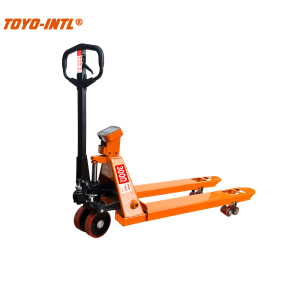
An orange manual hydraulic pallet truck with a weighing scale.
What to State in an Inquiry
A useful inquiry gives the supplier enough detail to confirm the row. Include the following information:
- Pallet size and the distance between its fork openings
- Maximum load and typical load in kilograms
- Required fork length and fork outer width
- Lowest fork height needed to enter the pallet
- Required maximum lifting height
- Indoor or outdoor use and floor condition
- Any need for a weighing scale or a high-lift scissor structure
If the pallet type changes by season or by site, describe each case. The supplier can then confirm which published row, or which configuration, fits each case.
How to Read the Sheet in Five Steps
Step 1: Identify the Exact Model
Start with the model code in the first column. On this sheet the models are SHLT15-550 and SHLT15-685. Every later value depends on that choice.
Step 2: Fix the Row
Follow one row across the table. Write the model code at the left of the row so the numbers cannot drift to a neighbouring model.
Step 3: Read the Four Values Together
Record rated load, fork outer width, fork length and lowered fork height from the same row. Read all four before judging whether the truck fits.
Step 4: Match the Fork to the Pallet
Compare fork outer width with the pallet opening and fork length with the pallet depth. A correct load rating cannot fix a fork that will not enter the pallet.
Step 5: Confirm the Field Names
Check that each value carries the published field name and unit. Ask the supplier to confirm any label that differs from the source table.
Common Reading Mistakes
The most common mistake is selecting by rated load only. Two trucks with 1,500 kg capacity can still fit different pallets because their fork outer widths differ.
Another mistake is mixing rows. A fork length from one model and an outer width from another create a combination that the data sheet does not publish. A third mistake is reading maximum lifting height where the question asks for lowered fork height. Those are separate fields, 800 mm and 85 mm on this sheet.
Missing information is not a low rating. When a field is absent, ask the supplier for the relevant data sheet instead of assuming a value.
Frequently Asked Questions
Is a higher rated load always better?
No. The right rated load matches the heaviest load the truck will carry. A truck with a 1,500 kg rating still needs the correct fork outer width and fork length for the pallet.
Can I combine the fork length of one model with the width of another?
No. Fork length and outer width must come from the same published row. Combining them produces a configuration the data sheet does not describe.
Which width decides whether my pallet fits?
Use fork outer width, 550 mm or 685 mm on this sheet. The single fork width of 160 mm describes one fork only. It does not describe the gap between the forks.
What does “height when the fork is lowered” mean?
It is the fork height with the forks fully down. The SHLT15-550 and SHLT15-685 both publish 85 mm. It differs from the maximum lifting height of 800 mm.
Why do two models share the same rated load?
They are two fork-width configurations of one capacity. Both lift 1,500 kg, but the 550 mm and 685 mm outer widths suit different pallets.
Conclusion
A hydraulic hand pallet truck data sheet is read one row at a time. Rated load, fork outer width, fork length and lowered fork height belong together. On the SHLT15-550 those values are 1,500 kg, 550 mm, 1,150 mm and 85 mm.
Before ordering, describe the pallet, the load and the required lift height. Ask TOYO-INTL to confirm the model, the exact data-sheet row and the fork dimensions in the quotation and technical documents.