


Choosing between an electric chain hoist and an electric wire rope hoist starts with the application, not the product name. Buyers need to consider the load, lifting height, operating frequency, required speed, power supply, suspension or trolley arrangement, runway dimensions, and working environment. Neither type is the universal answer. The correct choice depends on the specifications of the exact model and configuration.
TOYO-INTL currently offers both electric chain hoists and electric wire rope hoists. Its published product tables show how much the available configurations can differ. For example, the KDB electric chain hoist table lists 1T through 10T configurations with a 4 m lifting height, while the DWH double-girder electric hoist table lists capacities from 1,000 kg through 16,000 kg and several lift-height combinations. These figures are useful examples, but they should not be treated as universal limits for every chain or wire rope hoist.
Start With the Lifting Application
The first step is to describe the work the hoist must perform. A request that only says “2-ton electric hoist” leaves out several decisions that affect the final configuration.
The buyer should identify the maximum load and the typical load, the required vertical travel, how often the hoist will start and lift, and how many hours it will operate each day. The inquiry should also explain whether the hoist will remain at a fixed lifting point or travel along a beam, whether low-speed positioning is required, and what electrical supply is available at the installation site.
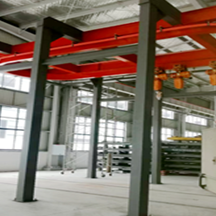
Space and installation conditions also matter. Available headroom, beam type, flange width, runway length, and minimum curve radius can affect the trolley and hoist arrangement. Indoor, outdoor, dusty, humid, corrosive, high-temperature, or otherwise unusual environments should be disclosed before a model is selected.
Compare Capacity and Lifting Height by Model

Comparison point | Electric chain hoist example | Electric wire rope hoist example |
Representative models | KDB and TD | DWH and SH |
Published capacity example | KDB: 1T-10T | DWH: 1,000-16,000 kg |
Published lift-height example | KDB: 4 m | DWH: 6/9/12/15/18 m; selected configurations also show 18/22/26/30 m |
Published work-class example | TD: M5 | DWH: 1Am/M4 to 4m/M7, depending on configuration |
Published power-supply example | KDB: three-phase, 220-480 V, 50/60 Hz | SH: 380 V, three-phase, 50 Hz |
Published lifting-speed example | KDB: 1.8-6.8 m/min across listed configurations | DWH: paired speeds from 0.66/4 to 1.6/10 m/min across listed configurations |
Note:The values in this table describe representative TOYO-INTL models. They do not mean that every electric chain hoist or wire rope hoist shares the same capacity, lift, speed, voltage, or work class.
Published capacity is one of the first fields buyers check, but it should always be read together with the model configuration.
The KDB Electric Chain Hoist main table lists configurations from 1T through 10T. The page shows a 4 m lifting height throughout that main table. Its lifting speed changes with capacity and chain-fall arrangement, with published examples ranging from 1.8 to 6.8 m/min.
The DWH Double Girder Electric Hoist table lists configurations from 1,000 kg through 16,000 kg. Many rows show lift-height options of 6, 9, 12, 15, and 18 m. Selected configurations also show 18, 22, 26, and 30 m. The product page therefore illustrates why buyers who need greater vertical travel must compare the exact lift-height options rather than relying on a category label.
These two product families should not be used to claim that one hoist type always offers more capacity or a longer lift. They show that the answer depends on the available model and configuration.
Compare Work Class and Operating Frequency
Operating frequency is another reason not to choose by capacity alone. TOYO-INTL product pages publish different work-class information across different series.
The TD Electric Hoist table labels its displayed configurations M5. The DWH table publishes paired FEM/ISO work groups ranging from 1Am/M4 to 4m/M7, depending on the capacity and speed configuration. The SH Electric Hoist table lists M4/30% ED for its displayed configurations.
These labels should be copied exactly and checked against the relevant product documentation. Buyers should not assume that two similar-looking hoists have the same operating classification, or that different classification notations can be converted without confirming the applicable system.
Before requesting a recommendation, provide the number of starts or lifts per hour, operating minutes per hour, operating hours per day, average load, maximum load, and vertical travel per cycle. This operating profile gives the supplier more useful information than capacity alone.
Compare Lifting and Travel Speed
Lifting speed influences both productivity and load positioning. A faster main speed may be useful when the application involves longer travel or repeated cycles, while a lower speed can help when the load must be positioned carefully. The buyer should therefore state whether a single speed, dual speed, or variable-speed arrangement is required.
The KDB table shows lifting-speed examples from 1.8 to 6.8 m/min and also publishes trolley-travel information. The DWH table shows paired lifting speeds, including examples from 0.66/4 to 1.6/10 m/min, together with a published 5/20 m/min traveling-speed field. The exact notation and available control arrangement should be confirmed for the selected model.
Horizontal travel should be specified separately from vertical lifting. The buyer should explain whether the hoist will be fixed, used with a push trolley, or used with a powered trolley. Beam and runway data should be supplied when travel is required.
Match the Hoist to the Available Power Supply
Power supply varies across TOYO-INTL electric-hoist models. The KDB main table shows three-phase 220-480 V and 50/60 Hz. The SH table shows 380 V, three-phase, 50 Hz for its listed hoisting and trolley motors.
Other TOYO-INTL models use different supplies. The MNTE page, for example, states 220 V, while the PA table shows 220/230 V at 50 Hz. A buyer should never assume that an electric hoist will match the local supply simply because its capacity is suitable.
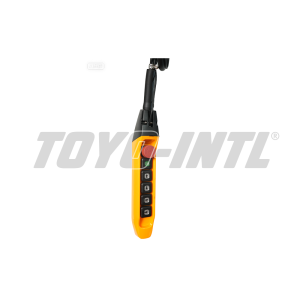
An RFQ should state the available voltage, number of phases, and frequency. It should also identify any control-voltage requirement and whether the preferred operating method is pendant control, wired control, wireless control, or another arrangement.
Review the Suspension, Trolley, and Runway
The installation determines how the lifting unit connects to the supporting structure and whether it must move horizontally. TOYO-INTL product tables include fields such as trolley speed, I-beam range, I-beam type, and minimum curve radius on selected models.
For a fixed lifting point, provide the suspension arrangement and available space. For a traveling hoist, provide the beam type, flange width, runway length, curve information, and the required travel speed. When headroom is limited, supply a drawing or clear dimensions rather than relying on a general description.
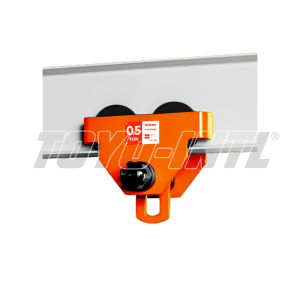
Electric Chain Hoist Models to Review
TOYO-INTL electric chain hoist examples include KDB, HHBD, HHBT, TD, and MNTE. These series cover different capacities, electrical supplies, speeds, controls, and work-class information.
The MNTE Electric Chain Hoist is a lighter published example. Its page lists 300 kg and 500 kg configurations, 220 V power, M4 working level, IP54 protection, and two-speed options. At the other end of the displayed chain-hoist examples, KDB and TD publish configurations extending into multi-ton capacities.
Electric Wire Rope Hoist Models to Review
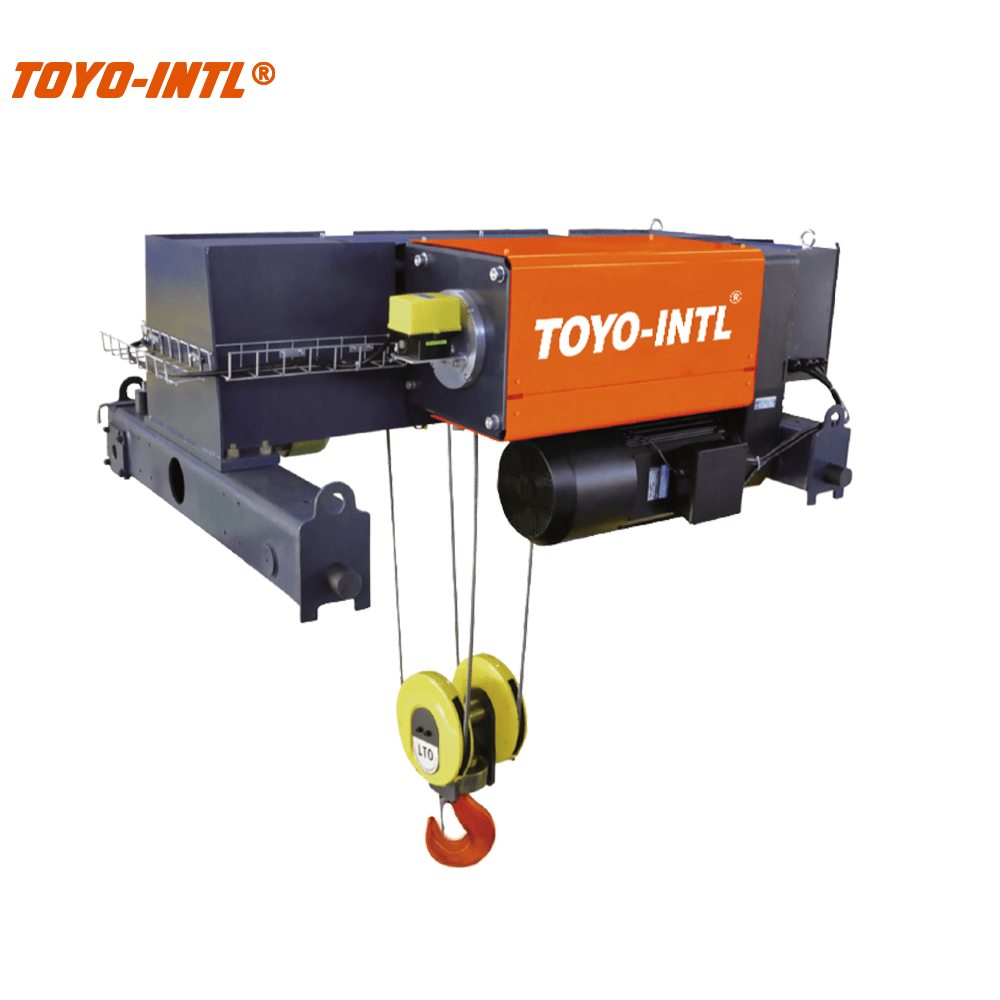
TOYO-INTL wire rope examples include DWH, SH, CD1, and PA. Their published specifications cover different capacity ranges, lift heights, work classes, power supplies, and installation arrangements.
The PA Electric Hoist is a compact published example using steel wire rope. Its table lists 220/230 V, 50 Hz and capacity pairs from 100/200 kg through 600/1,200 kg. The DWH and SH pages cover larger published configurations and more extensive hoist and trolley data.
What to Include in an Electric Hoist Inquiry
To compare chain and wire rope options efficiently, send the supplier the following information:
- Maximum and typical load
- Required lifting height
- Available headroom and installation dimensions
- Lifts or starts per hour and operating hours per day
- Required lifting speed and positioning speed
- Fixed suspension or trolley travel
- Beam type, flange width, runway length, and curve information
- Available voltage, phase, and frequency
- Control preferences
- Operating environment
- Destination country or region
- Quantity and required technical documents
Frequently Asked Questions
Which can lift more: an electric chain hoist or a wire rope hoist?
The product type alone does not answer this question. Compare the capacity table for the exact model. The current KDB and DWH figures are representative model examples, not universal limits for chain and wire rope hoists.
Which type is suitable for a longer lifting height?
Lift-height options must be checked by model and configuration. The current DWH table publishes several lift-height combinations, while the KDB main table shows 4 m. This comparison does not establish a universal rule for every product family.
Can an electric hoist be selected using only the load weight?
No. The inquiry should also include lifting height, operating frequency, required speed, power supply, suspension or trolley requirements, beam data, and the operating environment.
Does TOYO-INTL offer both chain and wire rope electric hoists?
Yes. The TOYO-INTL Electric Hoist category includes electric chain hoist and wire rope hoist product families.
Conclusion
Electric chain hoists and electric wire rope hoists should be compared through the exact model specifications and the actual lifting application. Capacity is only the starting point. Lift height, operating frequency, speed, power supply, trolley arrangement, runway dimensions, environment, and required documents all influence the final configuration.
The most useful next step is to prepare a complete application description and ask TOYO-INTL to confirm the model, configuration, limitations, and technical documents before ordering.